La mort omniprésente
Pedro PáramoLa mort omniprésente is the pattern of death that runs through Comala’s private rooms, public streets, and final moments. It appears first as something anticipated, then as a loss that alters communal life, and finally as the bodily limit that neither power nor memory can postpone. The novel’s deaths differ in circumstance, but their effects gather around the same fact: the living must continue amid endings they cannot control.
Death Anticipated
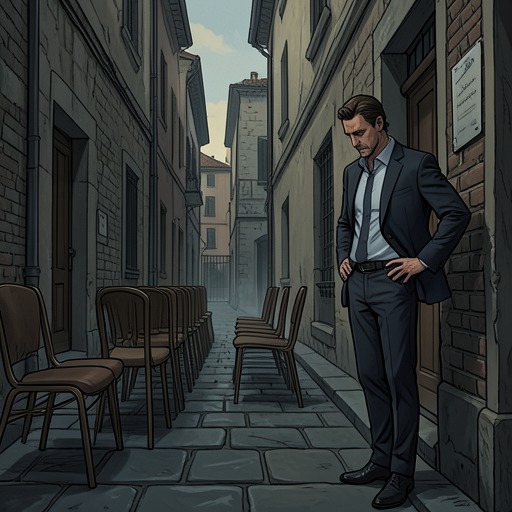
Death is made present before it occurs when the priest visits Susana San Juan. She asks whether he has come to confess her again; he explains that he has come instead to prepare her for death. When she asks whether she is going to die, he answers yes. The exchange is brief and direct: the priest does not soften the certainty, and the anticipated death enters the conversation as a fact to be faced rather than a remote possibility.
That preparation gives death a social and religious dimension. Susana is not alone with the knowledge of her condition: a priest comes to speak with her, and she questions the purpose of his visit. Yet the scene does not present spiritual preparation as a cure or a reprieve. His words name what is approaching; they cannot change it. Death is therefore present both as a bodily ending and as an expectation that reshapes the living person’s remaining time.
Private Loss and Public Mourning
At dawn on December 8, the bells wake Comala. The morning is gray, and the ringing begins with the largest bell before other bells join. People initially take the sound for the call to high mass; some open their doors, already awake and waiting for the Angelus to mark the end of night. That ordinary interpretation fails as the bells continue beyond the expected hour. The churches of the main church, Sangre de Cristo, Cruz Verde, and perhaps the Santuario all sound together.
By noon, the ringing has not stopped; it continues through night and grows into a single, louder lament. The men have to shout to make themselves heard. After three days, they are deaf, and the bells persist, some cracked and reduced to a dull, jar-like sound. The duration turns mourning into an oppressive condition of the whole town: the bells do not merely announce a death but occupy the hours and make ordinary speech difficult. Only after this prolonged sound does the report become explicit: Doña Susana has died, and the dead woman is identified as Pedro Páramo’s wife.
A separate household loss is described through Refugio’s final night. Abundio Martínez tells a woman that Refugio died in his hands around eleven the previous night. He had sold even his donkeys to obtain what he needed to ease her ending. His account makes care inseparable from material deprivation: the effort to comfort his dying wife costs him the animals he owns. Her death is not marked by Comala’s vast peal of bells in this account, but by the intimate circumstance of a husband keeping vigil and trying to relieve her last hours.
Death and Violence
Refugio’s death leads Abundio to seek help to bury her. As he approaches, the scene turns from a request prompted by bereavement to an act of violence against Pedro Páramo. Pedro’s face disappears beneath the covers while Damiana Cisneros of Media Luna cries out that he is being killed. The juxtaposition is stark: Abundio has come with the practical need to bury his wife, while Pedro’s own death becomes immediate within the same encounter.
Those present disarm Abundio, who is still holding a bloodied knife, and take him away. The act establishes the physical evidence of the attack and its immediate consequence, but it does not restore order or undo what has happened. Abundio is led off while Pedro remains at the center of the scene, no longer protected from death by his authority. The account places public violence beside domestic bereavement without making either one a substitute for the other: one loss has already occurred, and another is unfolding.
Pedro Páramo’s Ending
Pedro’s own awareness of death is bound to memory. He recalls Susana San Juan beneath a great moon, the image interrupting the present as his body becomes unable to move freely. He identifies this moment as his death. The memory does not bring Susana back or reverse her loss; instead, it overtakes the present in which Pedro is physically failing. The sequence makes remembrance a final mental refuge while keeping the body’s decline unmistakable.
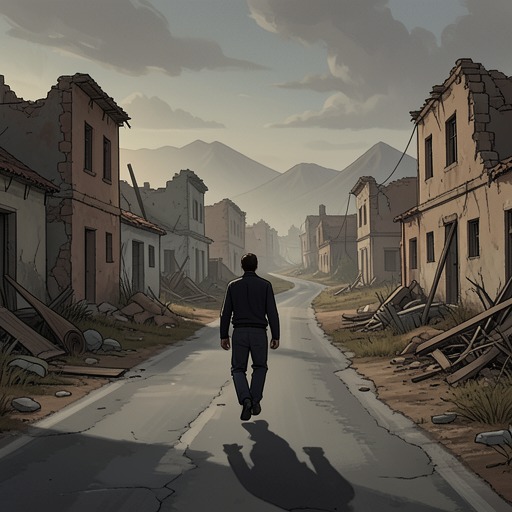
The landscape around him is devastated and empty as sunlight gives things their shape. His eyes move from one memory to another, effacing the present, and his heart abruptly stops. Even at this threshold he hopes the experience will not become another night. That hope sits uneasily beside the certainty of his recognition: he knows death has arrived, yet consciousness still reaches for reassurance.
When Pedro says he will come, he leans on Damiana Cisneros of Media Luna and tries to walk. After a few steps he falls, with a supplication deep within him but no words spoken. He strikes the earth and collapses like a heap of stones. His ending reduces the powerful landowner to a body that cannot rise or command the scene. Across the novel’s deaths, the forms of ending remain distinct—warning, prolonged communal mourning, a husband’s vigil, violent attack, and final collapse—but none is contained by private feeling alone. Each leaves other people to hear, witness, care for, bury, or endure what follows.